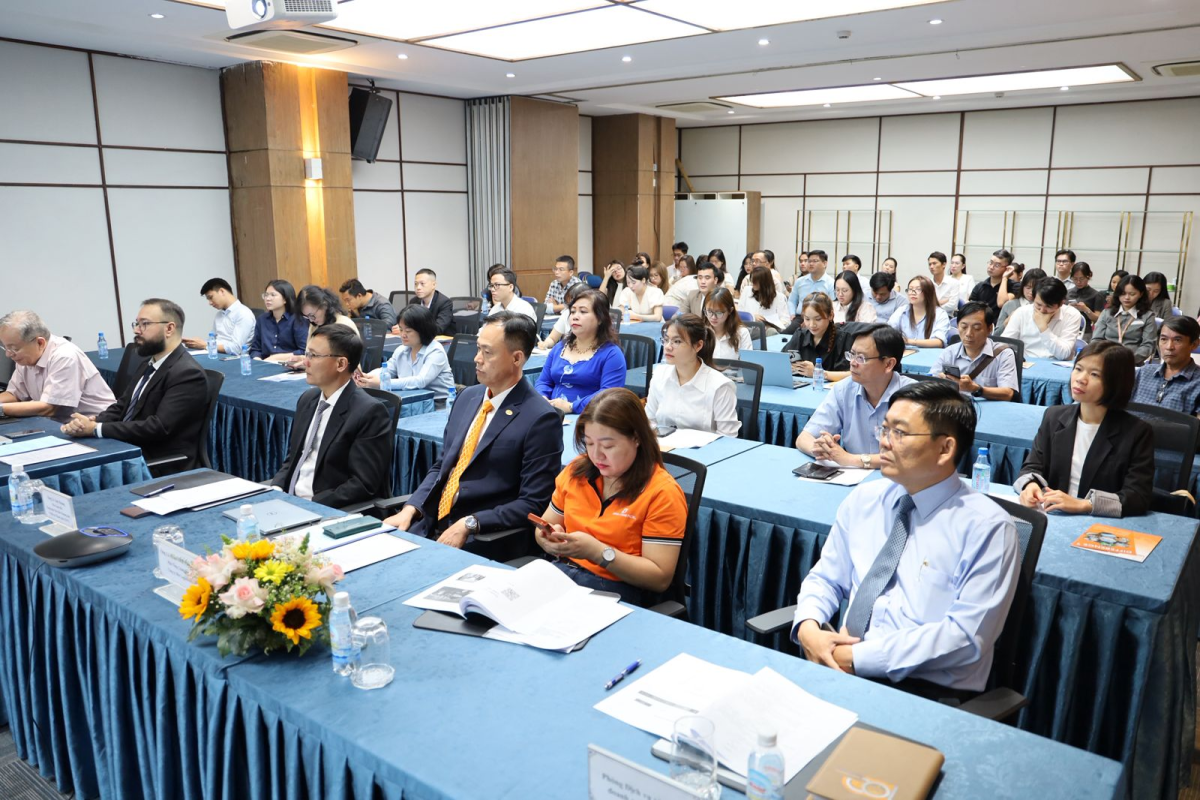
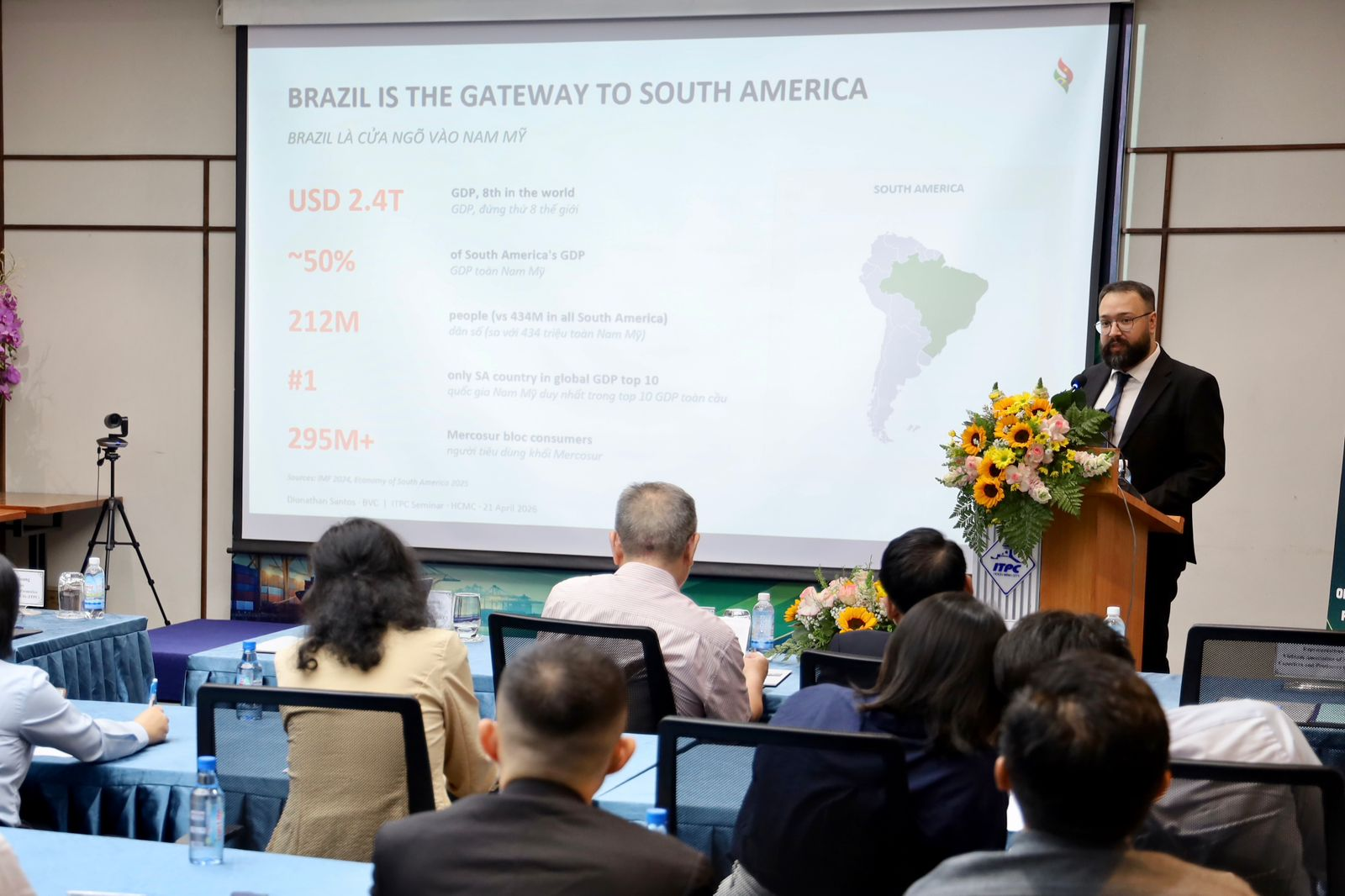
On April 21, the Ho Chi Minh City Investment and Trade Promotion Centre (ITPC) hosted the seminar “Export Prospects to the Brazilian Market: Opportunities and Challenges for Vietnamese Enterprises.” The event brought together public and private sector specialists with a clear purpose: showing Vietnamese businesses how to turn interest into real operations in Latin America’s largest market.
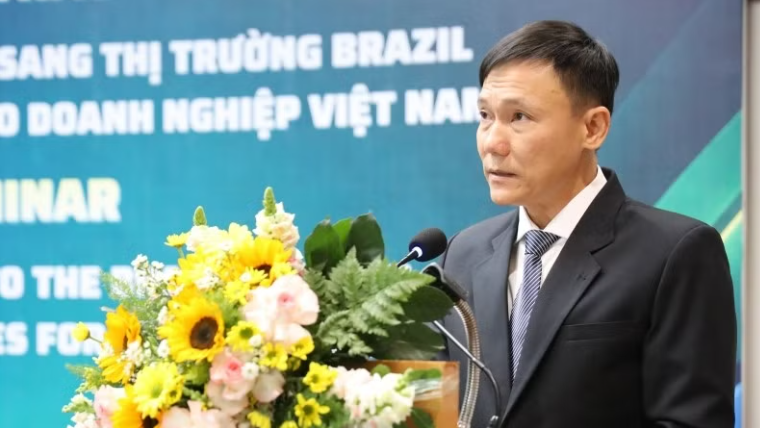
The opening remarks were delivered by Le Anh Hoang, Deputy Director of ITPC, who framed the seminar within the current geopolitical context: global instability and disruptions to transport routes are creating genuine urgency around market diversification. In this environment, Brazil stands out as a strategic alternative — the largest economy in Latin America, with over 200 million people, strong purchasing power, and comparatively limited exposure to the geopolitical tensions affecting other destinations.
The numbers support the attention. Bilateral trade reached approximately US$ 8 billion in 2025, with Vietnamese exports accounting for around US$ 2.7 billion. Both countries have set a target of US$ 15 billion by 2030 — a leap that demands structure, market knowledge, and concrete partnerships. Experts were direct: current results remain disproportionate to the potential. Brazil imports between US$ 250 and US$ 300 billion annually from various origins, and Vietnam’s share remains small.
Dionathan Santos, Vice President of the BVC, led the most practical session of the event. Moving beyond the macroeconomic overview, Santos presented the five buyer profiles that Vietnamese exporters need to learn to identify, introduced the federal CIB database — publicly accessible — as a tool for verifying Brazilian partners, and highlighted the differences in how Brazilian buyers communicate and make purchasing decisions. The central message: pricing built for the European market will not move on a Brazilian shelf.
Victor Key, President of the Brazil Vietnam Chamber (BVC), and Pham Hong Trang, Vietnam’s Trade Counsellor in Brazil, participated in Brasil Online, an event that connected business leaders and government officials in real time between the two countries. Pham Hong Trang reinforced the view that Brazil is not merely a large consumer market: it also serves as the gateway to MERCOSUR, a bloc of more than 300 million people. The sectors with the strongest growth potential identified by the counsellor include seafood, processed foods, textiles, and electronic components. The challenges are equally significant: high tariffs for non-MERCOSUR members, mandatory labeling in Portuguese, and sector-specific certifications such as MAPA for agricultural and fishery products, ANVISA for health and cosmetics, and INMETRO for industrial goods.
The event also marked a milestone for Vietnam’s presence in Latin America. ITPC announced the dispatch of the first-ever Vietnamese business delegation to APAS Show, Latin America’s largest food and retail trade fair, taking place in São Paulo from May 18 to 21. The participation signals Vietnam’s entry into one of the hemisphere’s most important food and beverage industry events.
The strategic window described at the seminar rests on concrete foundations: Strategic Partnership signed in November 2024, market economy status granted in March 2025, the tilapia market reopened in April 2025, and MERCOSUR-Vietnam Preferential Trade Agreement negotiations launched in December 2025. In over 35 years of diplomatic relations, the current moment is without precedent.