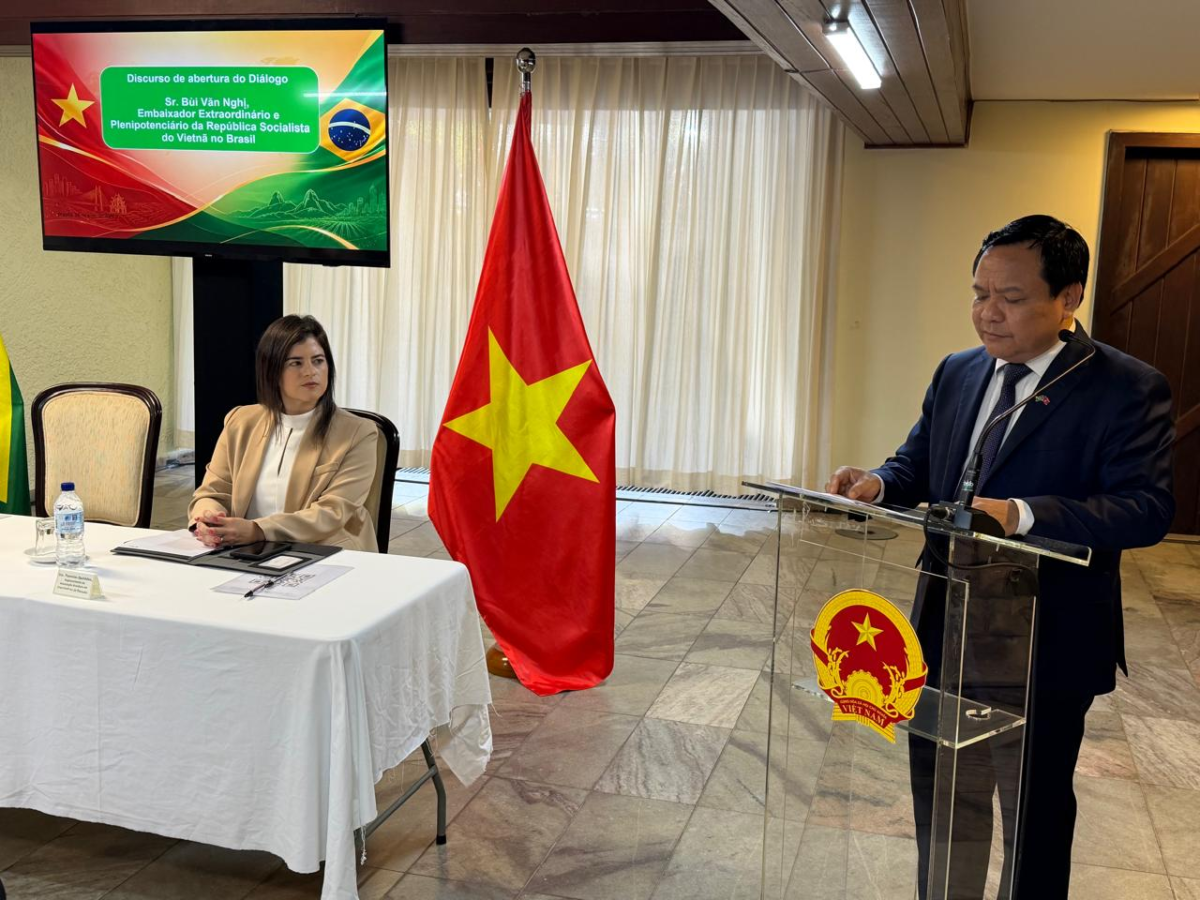

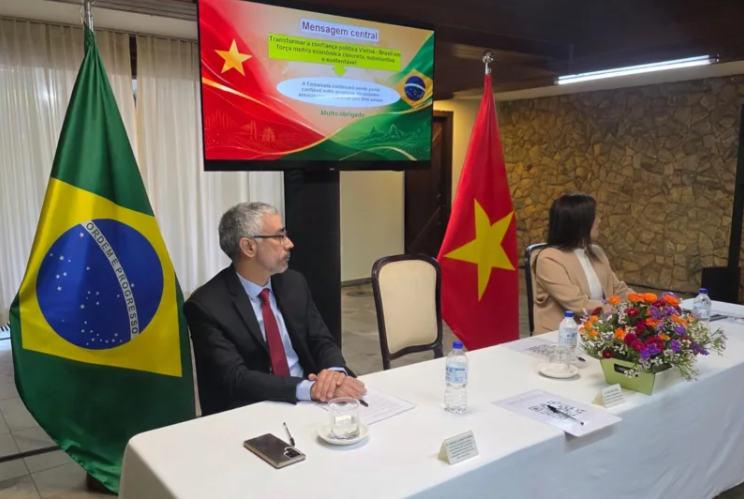
São Paulo, July 9, 2026 – The Embassy of Vietnam in Brazil hosted an important meeting on Wednesday (July 9), bringing together representatives of the Vietnam Association of Seafood Exporters and Producers (VASEP), the Brazilian Association for the Promotion of Fish and Seafood (ABRAPES), Brazilian seafood importers, Vietnamese exporters, and government officials from both countries to discuss the strengthening of bilateral seafood trade and the regulatory challenges facing the sector.
The event took place at a strategic moment for Brazil-Vietnam trade relations. Despite the consistent growth in bilateral trade, particularly in Vietnamese seafood exports to the Brazilian market, participants emphasized the need to expand institutional dialogue to ensure predictability, legal certainty, and technical cooperation.

Opening the event, Ambassador Bui Van Nghi highlighted that Brazil and Vietnam are currently experiencing one of the strongest periods in their diplomatic relationship, now elevated to a Strategic Partnership. According to the Ambassador, the next challenge is to transform this outstanding political relationship into tangible economic results.
He noted that bilateral trade recorded significant growth during the first half of the year while remaining well balanced between exports and imports. He also emphasized the complementary nature of the two economies. Brazil stands out as a major supplier of agricultural commodities, raw materials, and energy, while Vietnam has developed strong capabilities in manufacturing, food processing, and seafood production.
The Ambassador acknowledged that important challenges remain, including high logistics costs, the absence of direct flights, limited market information for businesses, and recent regulatory issues affecting agricultural and seafood products. He stressed that any trade concerns should be addressed through technical dialogue, transparency, and science-based decision-making.
Among the priorities presented were expanding bilateral investment, strengthening value chains, advancing negotiations for a Vietnam-Mercosur Preferential Trade Agreement, and establishing permanent mechanisms for cooperation among governments, industry associations, and businesses.
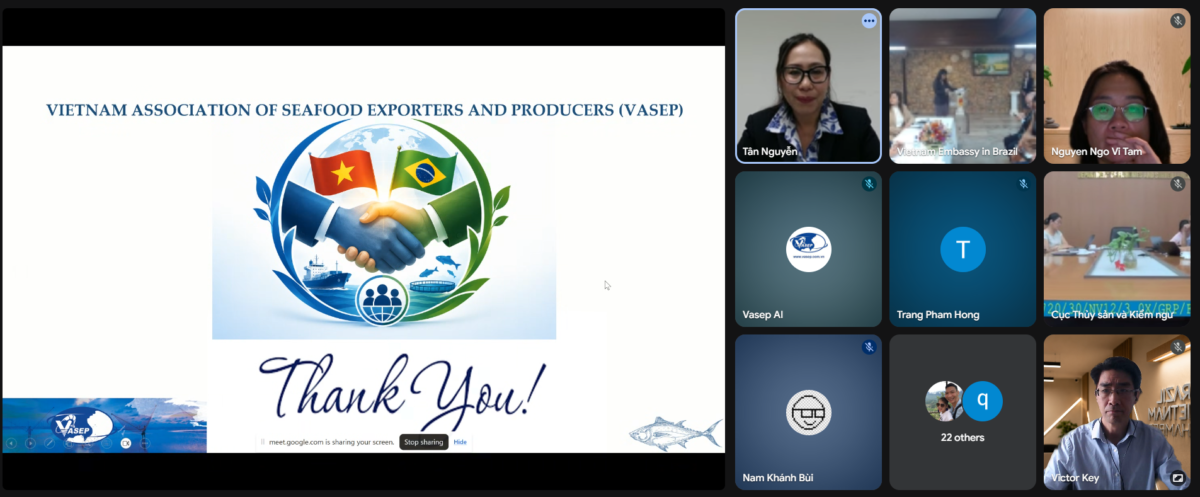
Representing VASEP, Secretary General Nguyen Hoang Nam presented an overview of Vietnam’s seafood industry, now one of the world’s leading seafood suppliers, with annual exports ranging from USD 9 billion to USD 11 billion to nearly 170 international markets.
According to VASEP, the industry has evolved significantly over the past two decades, supported by modern processing facilities, a strong private sector, and internationally recognized standards for quality, traceability, and sustainability.
The presentation highlighted two major aquaculture sectors.
Pangasius has become one of the world’s greatest aquaculture success stories, exported to more than 100 countries through a fully integrated value chain.
Tilapia was presented as the next chapter of Vietnam’s aquaculture development. With production estimated at approximately 420,000 metric tons in 2025, Vietnam continues investing in international certifications, traceability, food safety, and sustainable production practices to expand its presence in global markets.
VASEP emphasized that Vietnamese seafood is not intended to compete with Brazil’s domestic production but rather to complement the Brazilian market.
“Our objective is not to replace Brazilian fish, but to provide consumers with greater choice, a reliable year-round supply, and high-quality seafood at competitive prices,” the association stated.
The organization also highlighted the remarkable growth of the Brazilian market for Vietnamese seafood. During the first half of this year alone, Vietnam’s seafood exports to Brazil increased by approximately 39%, making Brazil one of the fastest-growing seafood markets for Vietnam in Latin America.
Representatives of Vietnam’s Ministry of Agriculture and Environment then presented the country’s official aquaculture management and food safety system.
They explained Vietnam’s certification procedures for aquaculture farms, mandatory registration programs, sanitary monitoring, traceability systems, and incentives for producers to obtain internationally recognized certifications such as VietGAP, GlobalG.A.P., ASC, and BAP.
Officials emphasized that residue control, food safety, and regular inspections are fundamental components of Vietnam’s national export quality management system.
Pham Hong Trang, Trade Counselor of the Embassy of Vietnam in São Paulo, presented a broader overview of bilateral trade relations.
She highlighted the strong growth of Vietnamese exports of electronics, machinery, auto parts, industrial products, and other value-added manufactured goods to Brazil.
Seafood exports alone exceeded USD 110 million during the first half of the year, representing growth of nearly 38% compared to the same period last year.
According to the Trade Counselor, further expansion of Vietnamese products in Brazil will depend on continuous adaptation to Brazilian regulations, stronger Vietnamese branding, expanded distribution channels, and closer cooperation among governments, business associations, and the private sector.
Representing ABRAPES, Executive Director Thamires Quinhões presented the perspective of Brazilian seafood importers.
She noted that Vietnam is currently Brazil’s second-largest seafood supplier, accounting for nearly one-quarter of the country’s seafood imports.
According to ABRAPES, imports play a complementary role alongside domestic production by expanding product availability and meeting the growing demand for seafood among Brazilian consumers.
Addressing current regulatory challenges, Thamires Quinhões highlighted Bill No. 6,331/2005, which proposes banning tilapia imports, as well as state-level measures involving tax incentives and animal health restrictions.
Although shipments continue to enter Brazil normally, she warned that these initiatives create legal uncertainty and reduce the predictability necessary for long-term business planning and investment.
ABRAPES reaffirmed that international trade decisions should always be based on scientific evidence, regulatory transparency, and ongoing dialogue between the public and private sectors.
At the conclusion of the meeting, Brazilian and Vietnamese representatives reaffirmed their commitment to expanding technical cooperation, strengthening information exchange, and promoting joint initiatives aimed at creating a more stable and favorable business environment.
Participants agreed that the partnership between Brazil and Vietnam holds enormous potential for future growth and that stronger institutional dialogue will be essential to transform the excellent diplomatic relationship between the two countries into new opportunities for trade, investment, and sustainable development across the seafood value chain.