Vietnam’s seafood industry recorded consolidated growth of 9.2% in the first half of 2026, overcoming global logistical instabilities and solidifying its position among the top three global exporters in the sector. This performance is a direct result of strategic restructuring focused on digitizing traceability and rigorous adherence to international sustainability standards. For the Brazilian market, this advancement signals a strategic opportunity for importers seeking to diversify portfolios with products offering high sanitary safety and added value.
According to consolidated data from the Vietnam Association of Seafood Exporters and Producers (VASEP), external revenues for the sector are projected to reach a historic mark of US$11.5 billion by the end of 2026. This growth is sustained by the recovery of demand in traditional markets such as the United States and the European Union, and by aggressive expansion in emerging economies in Latin America. The Asian country has successfully converted regulatory challenges into competitive advantages by investing heavily in certifications like ASC (Aquaculture Stewardship Council) and MSC (Marine Stewardship Council).
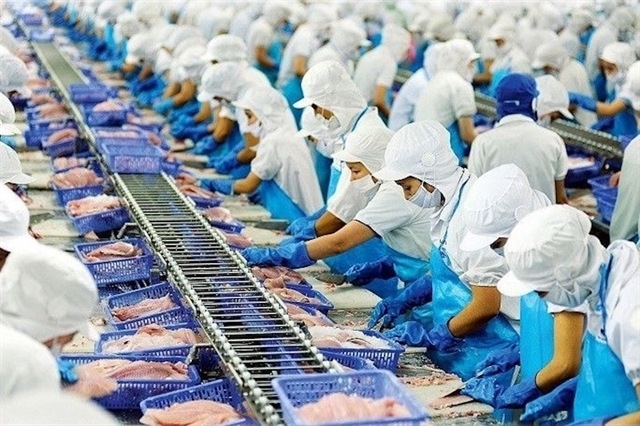
The aquaculture sector, specifically shrimp (*Tôm*) and Pangasius (*Cá tra*) farming, leads the export agenda with innovations in thermal processing and smart packaging. According to Vietnam’s Ministry of Agriculture and Rural Development, the country currently operates over 600 processing facilities that meet stringent Western export standards. This technical rigor has been crucial for Vietnam to maintain its trade flow even amidst increasingly critical sanitary inspections at international ports.
The Vietnamese trajectory in the aquatic protein sector bears significant parallels with the development of South Korea’s electronics industry in past decades. Just as Seoul transitioned from basic assembly to technological leadership, Hanoi is moving from supplying raw materials to providing ready-to-eat products. This paradigm shift reduces exposure to commodity price volatility and increases profit margins for distributors operating at the end of the supply chain.
For Brazilian businesses, the practical impact of this evolution is the assurance of stable supply in a scenario of growing demand for healthy proteins in Brazil. Supplier diversification is an irreversible trend to ensure food security and price competitiveness in the national retail market. Vietnam, through its advancements in aquaculture biotechnology, now offers a level of harvest predictability and quality standards that few regional competitors in ASEAN (Association of Southeast Asian Nations) can replicate.
The Brazil-Vietnam Chamber of Commerce and Industry (BVC) observes that Vietnam’s overcoming of technical barriers opens a solid path for reducing transactional costs. Vietnam’s focus on “Blue Economy” and ESG (Environmental, Social, and Governance) practices aligns with the requirements of major retail and food service groups in Brazil, which now prioritize partners with audited carbon footprints and proven social responsibility in their production chains.
Victor Key, President of the BVC in São Paulo, highlights that the current moment is one of strategic convergence between the two nations. “The maturity achieved by the Vietnamese seafood industry in 2026 is not just a statistical data point, but an invitation to technical and commercial collaboration. We are witnessing a Vietnam that not only exports products but exports global standards of efficiency,” Key states. The BVC’s mission has been to facilitate this bridge, ensuring that Brazilian importers have direct access to certified producers and adequate logistical support.
The outlook for the 2026-2027 biennium points towards even greater integration. With the advancement of economic cooperation agreement negotiations and the facilitation of phytosanitary protocols, the trend is for Brazil to consolidate itself as a priority destination for Vietnam’s premium products. Brazilian businesses that anticipate this movement by establishing long-term partnerships now will be better positioned to capture the market share that demands both scale and qualitative excellence.
Ultimately, Vietnam’s success in overcoming structural challenges serves as a model of resilience and adaptation. The transformation of a traditional industry into a high-tech sector with international compliance reinforces the importance of viewing Southeast Asia not just as a supplier, but as a fundamental strategic partner for the growth of bilateral Brazilian trade. The BVC remains the necessary institutional link to convert these trends into practical and profitable results for both markets.